Defender Parts & Accessories

Defender Soft top conversions

2 July 2026
Back to blog

Defender Soft Tops Are Having a Moment — But There's More to Them Than the Hood

Ask someone what they picture when they think of a classic Land Rover Defender and there's a reasonable chance they picture a soft top. Hood down, sun in, doors off, the whole thing. It's the version of the vehicle that exists in most people's imagination before they've ever owned one.

The reality of a soft top Defender is slightly more layered than that image suggests, and a conversion from hard top or station wagon to soft top, done properly, involves more thought than simply sourcing a hood and fitting it. The interior needs rethinking. The door situation needs addressing. And the result, if all of it is handled well, is one of the most characterful and enjoyable Defenders you can drive.
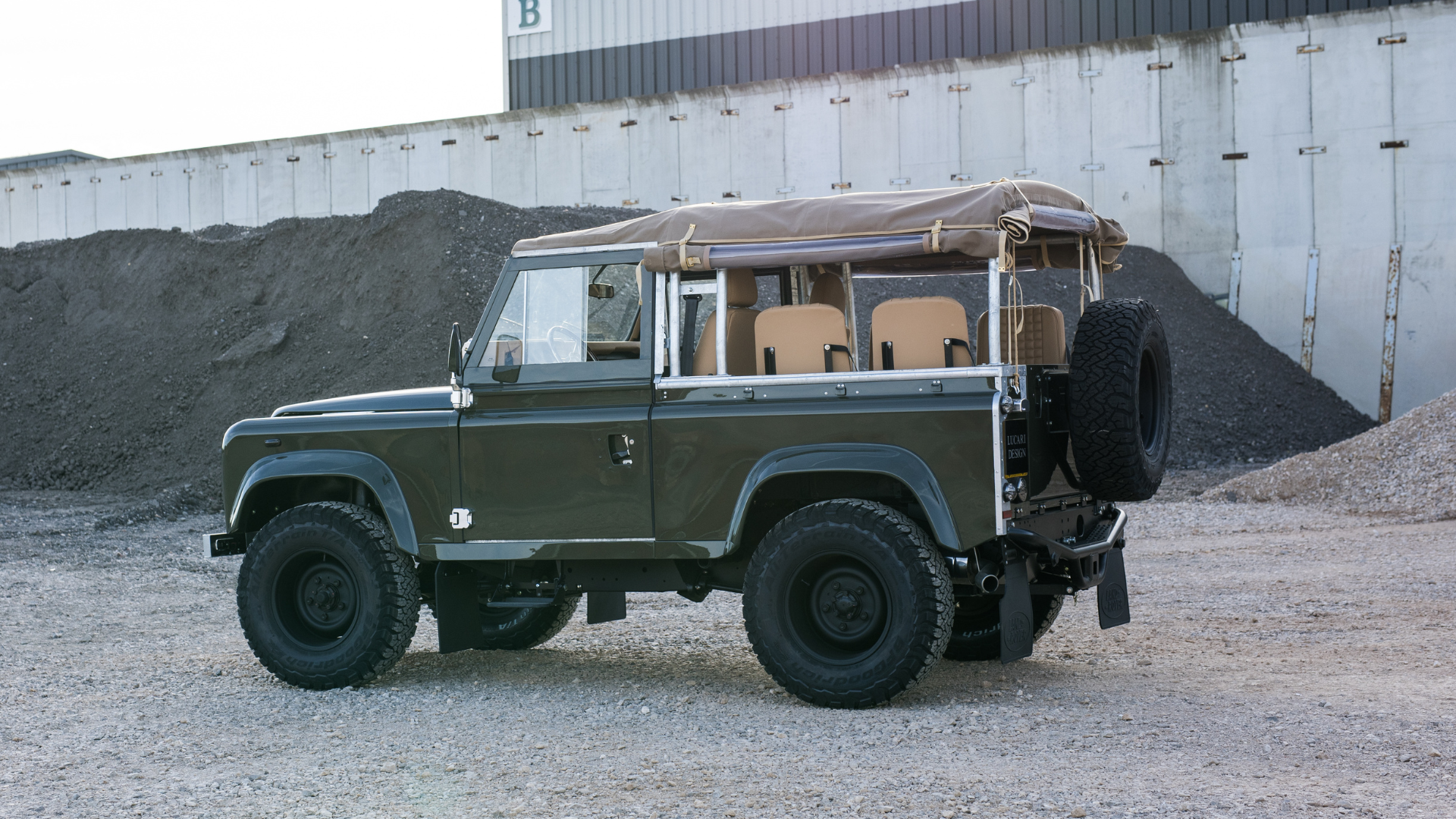
  • Side profile of a dark olive green Land Rover Defender 90 with a tan canvas soft top rolled back at the sides and rear, LUCARI Barley leather rear-inward seats visible and a rear-mounted spare wheel, parked on gravel with an industrial building behind.

What a Soft Top Conversion Actually Involves

The hood itself is the obvious starting point. Classic Defender soft tops use a canvas hood that fits over a frame, and the quality and fit of that hood matters considerably. A well-fitted hood from quality canvas sits correctly, doesn't flap at motorway speeds in ways that make conversation impossible, and keeps water out with a degree of reliability that a poor-quality one won't. We work with materials and suppliers we trust here. It's not a place to economise.

What people often don't think about until they're further into a soft top project is the interior. A hard top or station wagon comes with a headlining and side panels that make sense for an enclosed vehicle. When you move to a soft top configuration, those surfaces either disappear or need rethinking entirely. A soft top Defender with no thought given to the interior surfaces, exposed metalwork, raw fixings, mismatched panels, looks and feels unfinished in a way that spoils the whole thing.

The builds we do here treat the soft top interior as an opportunity rather than a compromise. Headlinings in appropriate materials. Defender seat upholstery specified to suit the open character of the vehicle. Door cards and trim panels that look deliberate. The inside of a soft top should feel considered, because it's much more visible than an enclosed vehicle's interior. You're not hiding anything behind glass and metal.

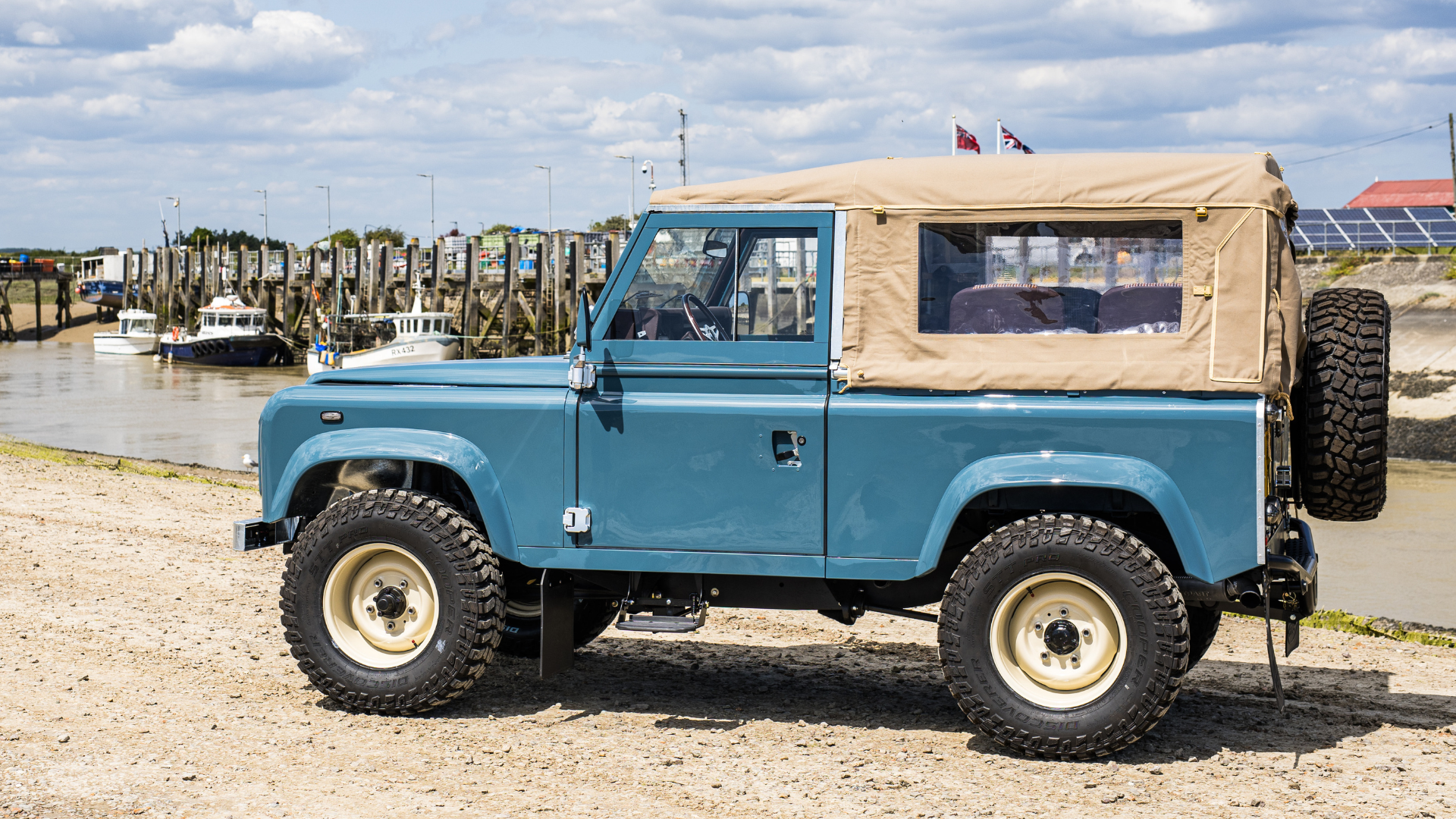
  • Side profile of a restored blue Land Rover Defender 90 fitted with a Sand Stayfast Soft Top with clear plastic side windows and cream steel wheels, and off-road tyres, parked on a shingle foreshore with a tidal harbour and moored boats in the background.

Doors and Half Doors

The door situation on a soft top Defender is one of the details that generates the most questions. Classic Defenders can be run with full doors, half doors, or no doors at all depending on configuration and personal preference. Half doors give you the open feel with some wind protection and a physical barrier on the side. Full doors with soft top uppers give you more weather protection. Doors off entirely gives you maximum exposure, which is excellent in summer and extremely bracing in October.

In our experience, most owners of soft top 90s and 110s settle on half doors for everyday use, with the option to go doorless on good days. The aesthetics of the half door on a classic soft top are particularly good, and it's a look that's entirely native to the vehicle and suits the proportions well.

Whatever door configuration you're running, the trim and finishing of those doors matters. Half doors on a soft top with worn or mismatched trim undermine the whole look of the vehicle.

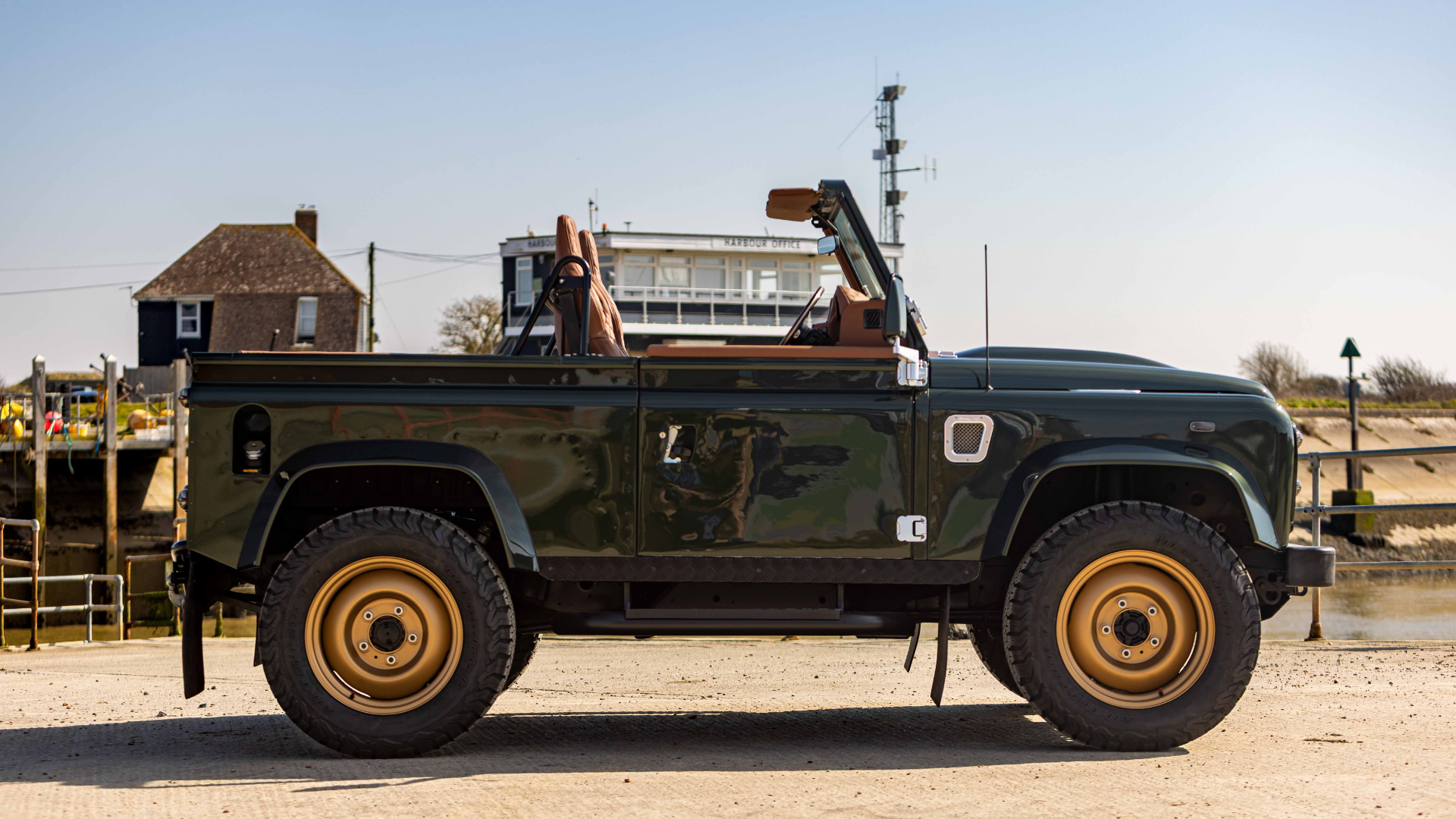
  • Side profile of a dark green Land Rover Defender 90 with the soft top fully removed, showing tan leather seats and half doors, fitted with gold steel wheels and off-road tyres, parked on a harbourside quay with the harbour office building visible behind.

The Rear Tailgate — Worth Getting Right From the Start

One element that often gets overlooked until late in a soft top project is the rear tailgate. On a classic Defender soft top, the way the rear doors are hung and finished makes a real difference to both the practicality and the overall look of the vehicle.

We stock the half-height rear tailgate side-hinged door in galvanised steel for Defender soft tops. The side-hinged configuration gives you a clean, workable rear access point that suits the soft top body well, and the galvanised finish handles the exposure that a rear tailgate takes without corroding or needing constant attention. It's a practical choice that also looks right on a classic Defender build.

If you're doing a full soft top conversion or refreshing one that's been partially finished by a previous owner, getting the rear door sorted as part of the same project rather than later will save you revisiting it.

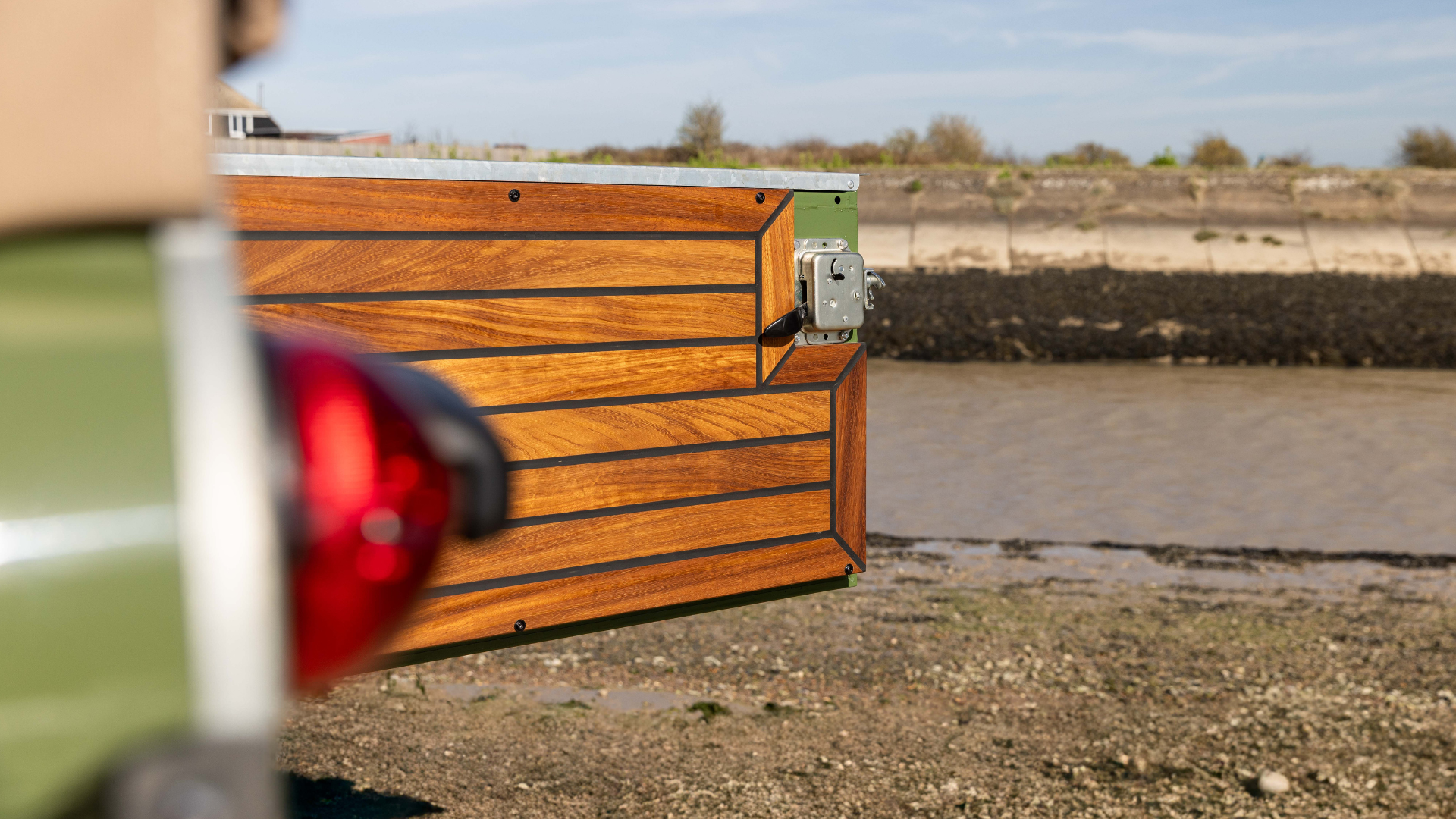
  • Close-up of an Iroko wood rear tailgate on a Land Rover Defender 90, showing the horizontal slat and black caulking detailing with a chrome latch fitting.

Choosing the Right Hood — and Why It Matters More Than People Expect

The hood is where most soft top projects start, and it's where most of the early decisions need to be made. The choice isn't just about colour. Material, window configuration, intended use and how much maintenance you're willing to do all feed into it. Getting this right at the beginning saves a lot of frustration later.

Stayfast Hoods

Stayfast is the material we'd point most customers towards for a full soft top hood that's going to be used regularly. It's a synthetic hood cloth that outperforms canvas in almost every practical respect. It doesn't shrink, it's fully waterproof from day one, and the windows, which look remarkably close to glass panels, stay clear and don't yellow or craze the way older PVC windows do. The expanding thread construction keeps everything taut and watertight over time.

We stock Defender Stayfast hoods in black, sand and brown, for both 90 and 110 soft tops. Each is available with or without side windows, which is a meaningful choice. Side windows give you more visibility and a more enclosed feel in poor weather. Without them, you get a cleaner look and better ventilation in warmer conditions. Neither is wrong. It depends on how you use the vehicle and what climate you're mostly driving in.

Canvas Hoods

Canvas is the original material, and there's a reason people still choose it. It looks right on a classic Defender in a way that nothing synthetic fully replicates. Cotton canvas has been fitted to Land Rovers since 1948, and on a retro-themed build it carries an authenticity that Stayfast, good as it is, doesn't quite match.

The trade-off is maintenance. Canvas is a natural material and it behaves like one. It will shrink if the tension isn't kept on it properly, particularly when wet. It needs reproofing every six to twelve months with a product like Nikwax or Fabsil. It requires hand cleaning rather than pressure washing. None of this is onerous if you're prepared for it, but it's worth knowing before you commit.

We carry canvas full soft top hoods in sand and black for the 90, without side windows. If the character of the build is pointing towards canvas, it's the right call. Just go in with clear expectations about what it asks of you in return.

Bikini Hoods

The bikini hood is a different proposition entirely. It covers the front section of the roof over the driver and front passenger, leaving the rear open. It's not a year-round hood and it's not trying to be. It's a summer option, a fair-weather choice, a way of getting maximum openness from the vehicle without going completely doorless and roofless.

In practice, a bikini hood gives shade on a hot day and reasonable protection from a passing shower without closing the vehicle in. It's lightweight, easy to fit and easy to remove. For owners who use their Defender seasonally or who want a dedicated summer configuration alongside a full hood for winter, it makes a lot of sense.

Our Defender bikini hoods are available in canvas in both sand and black, and suit 90s and 110s. Like the full canvas hoods, they're manufactured by Exmoor Trim to a consistent standard.

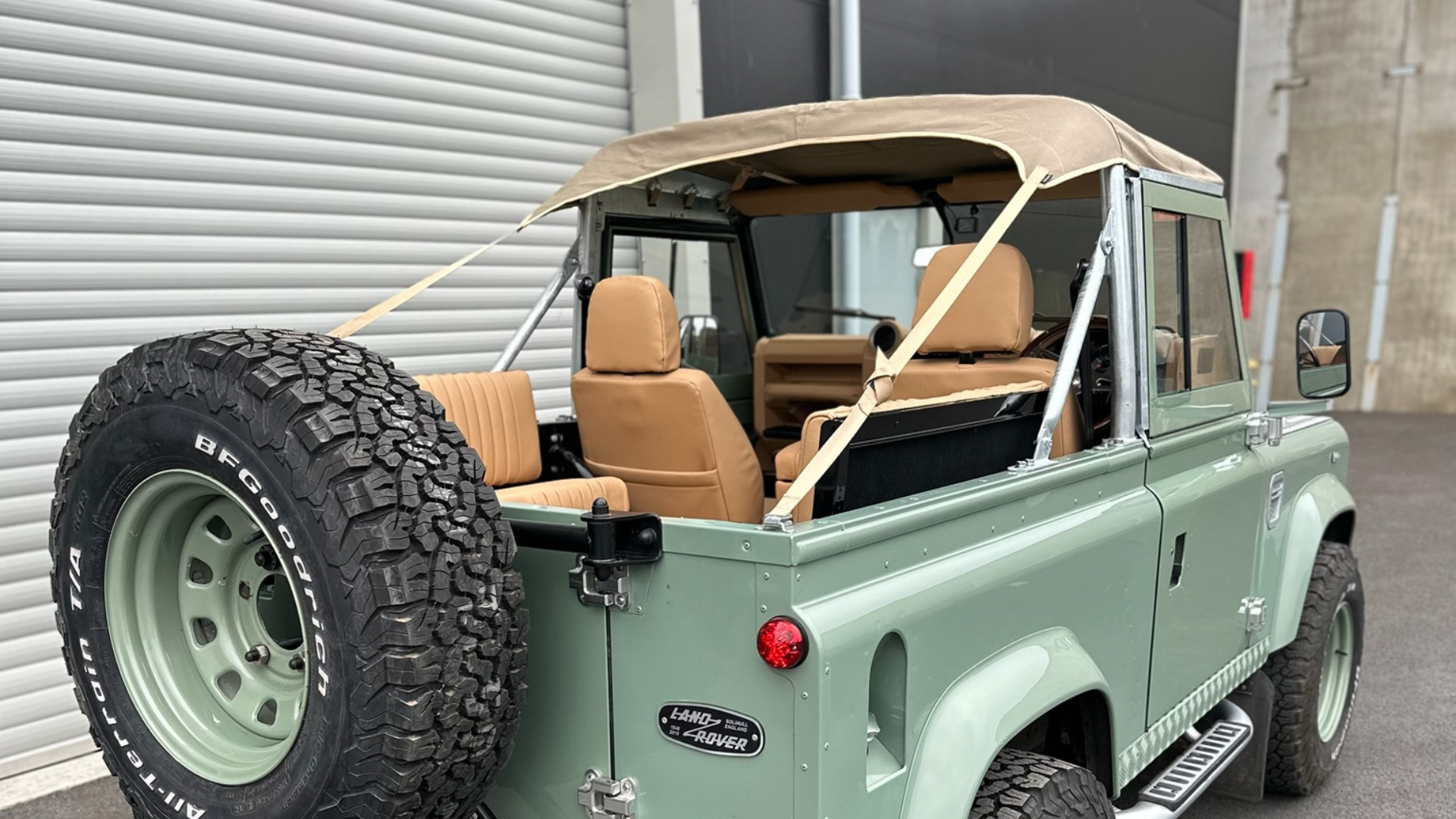
  • Rear three-quarter view of a sage green Land Rover Defender 90 with the Canvas Bikini Soft Top partially open and secured with tan straps, revealing LUCARI Barley leather interior seats. A BFGoodrich All-Terrain tyre on a matching sage green steel wheel is prominent in the foreground, photographed in front of roller shutter workshop doors.

Hood Stick Sets

A hood is only as good as the frame it sits on. Hood stick sets are the structural element that gives the hood its shape, and the difference between a standard stick set and a heavy-duty galvanised one is noticeable both in how the hood sits and how long the whole setup lasts.

We stock heavy-duty galvanised Defender hood stick sets for both 90 and 110 soft tops, as well as bikini hood stick bar sets in galvanised and black powdercoat. The galvanised option uses a zinc hot dip process for corrosion resistance. The black powdercoat suits builds where the exterior spec is running darker and you want the frame to disappear rather than contrast.

The bikini stick sets are worth noting specifically. Each includes a heavy-duty front hoop with integrated seat belt mounts, diagonal support bars and capping brackets, which means you don't need a separate front seat belt bar. It's a neater solution than older configurations and one of those details that makes fitting and day-to-day use straightforward.

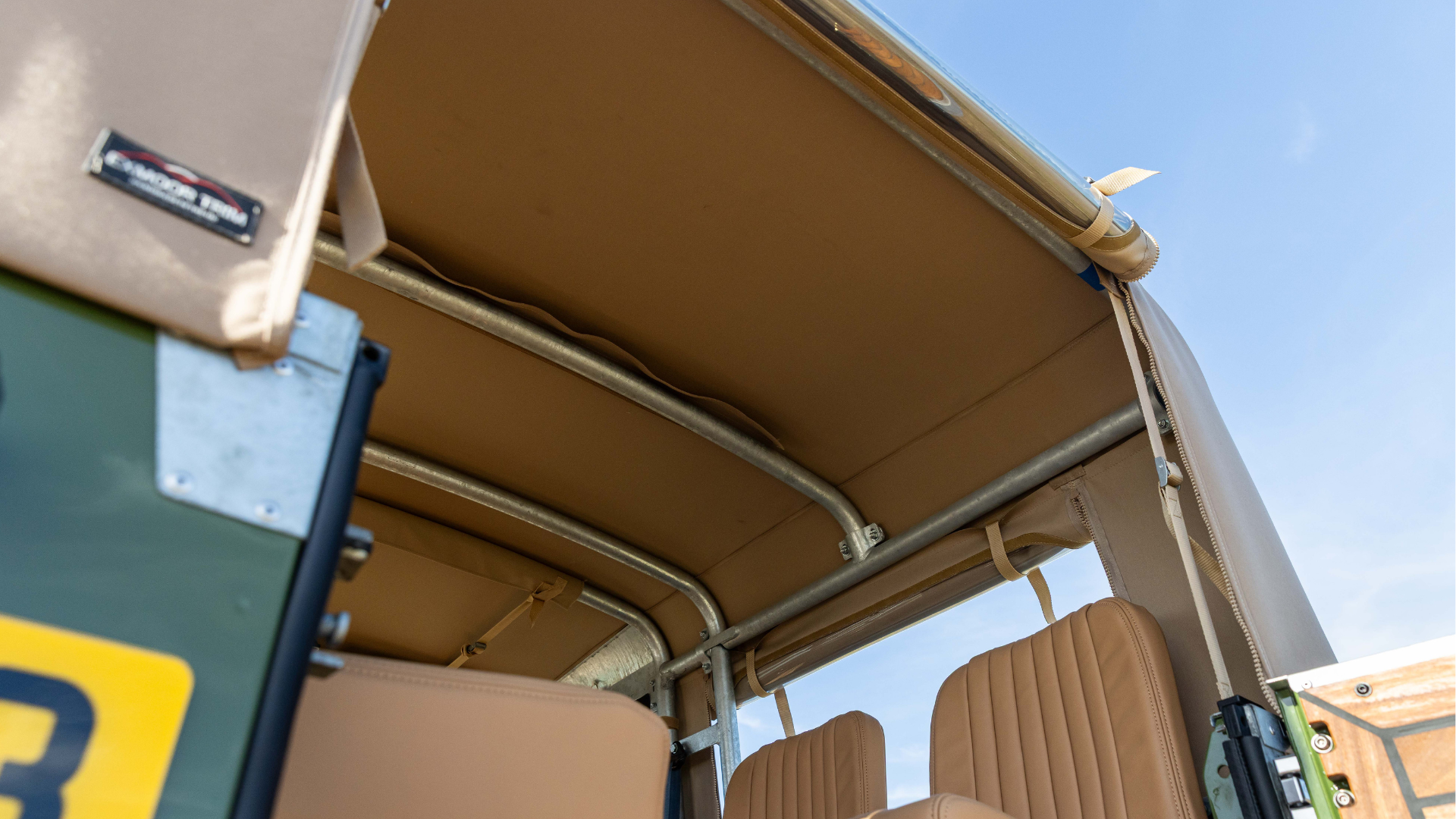
  • Upward view from inside a Land Rover Defender 90 showing the underside of a Sand Stayfast Soft Top stretched over galvanised roll cage hoops, with LUCARI Barley leather seats below and blue sky visible through the open sides.

Soft Top Interiors Done Right

The interior of a soft top Defender that's been properly built has a particular quality to it. It's open and airy in a way an enclosed vehicle can't replicate, but it doesn't feel bare or unfinished. The seat upholstery is clean and well-fitted. The cubby box sits tidily between the seats. The floor covering, headlining and panel trim are all consistent with each other.

What we've found with soft top builds is that people are often tempted to under-specify the interior on the assumption that it'll get wet, get muddy and generally take a beating. That's sometimes true, but a well-specified interior in appropriate materials actually handles those conditions better than a neglected original one. Modern automotive leather is extremely durable. Quality carpet and flooring shrugs off mud. The idea that a soft top Defender's interior has to be purely functional is one of those assumptions worth questioning.

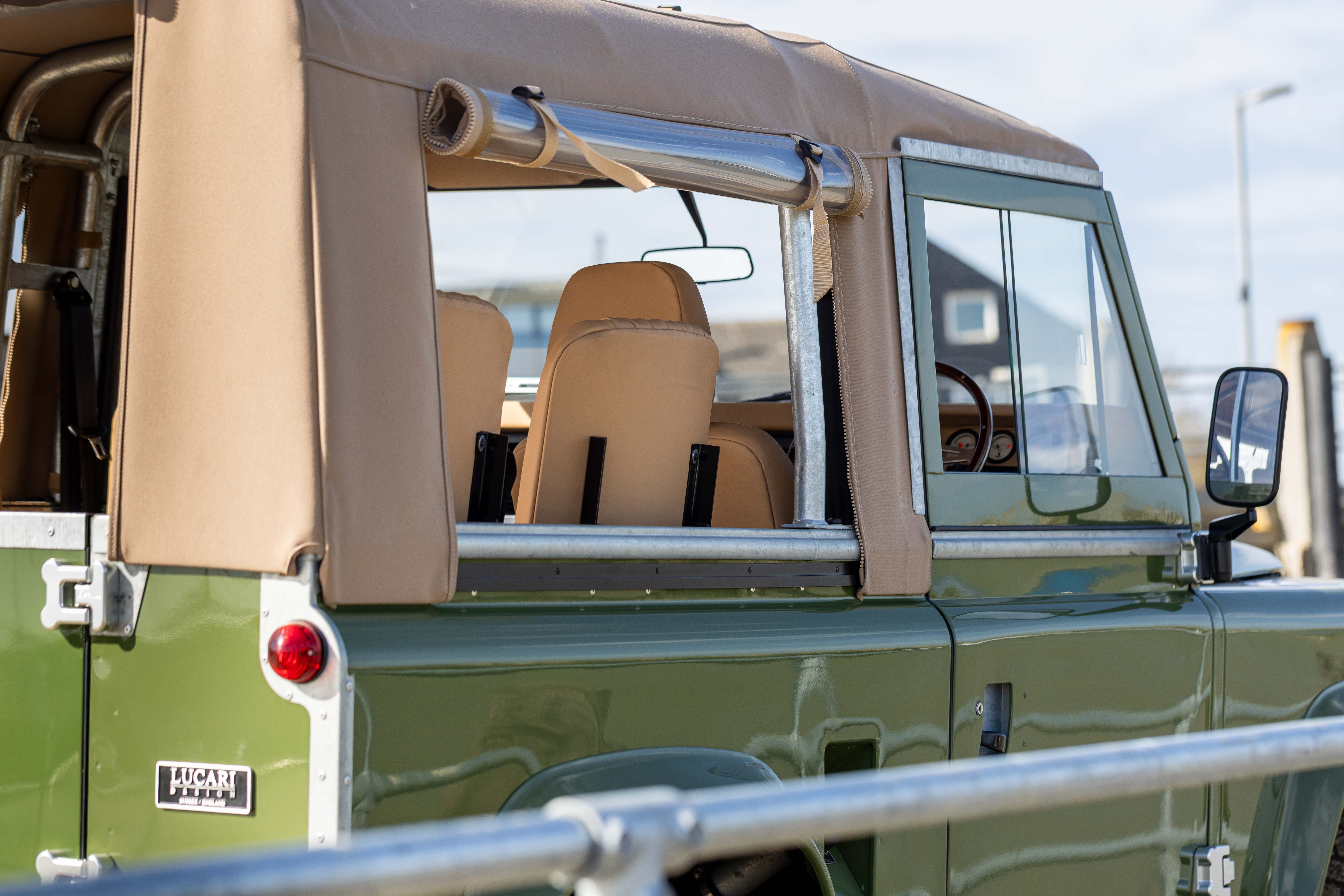
  • Close-up of a Sand Stayfast soft top on a Keswick Green Land Rover Defender 90, showing the rolled front section on a polished aluminium rail, clear side windows, and tan leather seats visible through the open rear section.

How to Approach a Soft Top Build

The best starting point is a clear idea of what you want the vehicle to be used for. A Defender 90 soft top that's going to be parked at shows and driven in good weather has different interior priorities from one that's being used as a daily driver through a coastal winter. The materials, the specification and the finishing details all adjust accordingly.

We'd always recommend treating the hood, the doors and the interior as a single project rather than separate stages. Not because we want to take on more work, but because the results are better when everything is considered together. A hood fitted over a half-finished interior, or vice versa, usually means coming back to redo things later.

If you're thinking about a Defender soft top conversion or want to improve the interior on an existing soft top, we'd be glad to talk it through. Call 01797 222256 or send us an enquiry here. You can also see how our own 90 and 110 soft tops are specced by following our Instagram and Facebook